S·he - On the Making
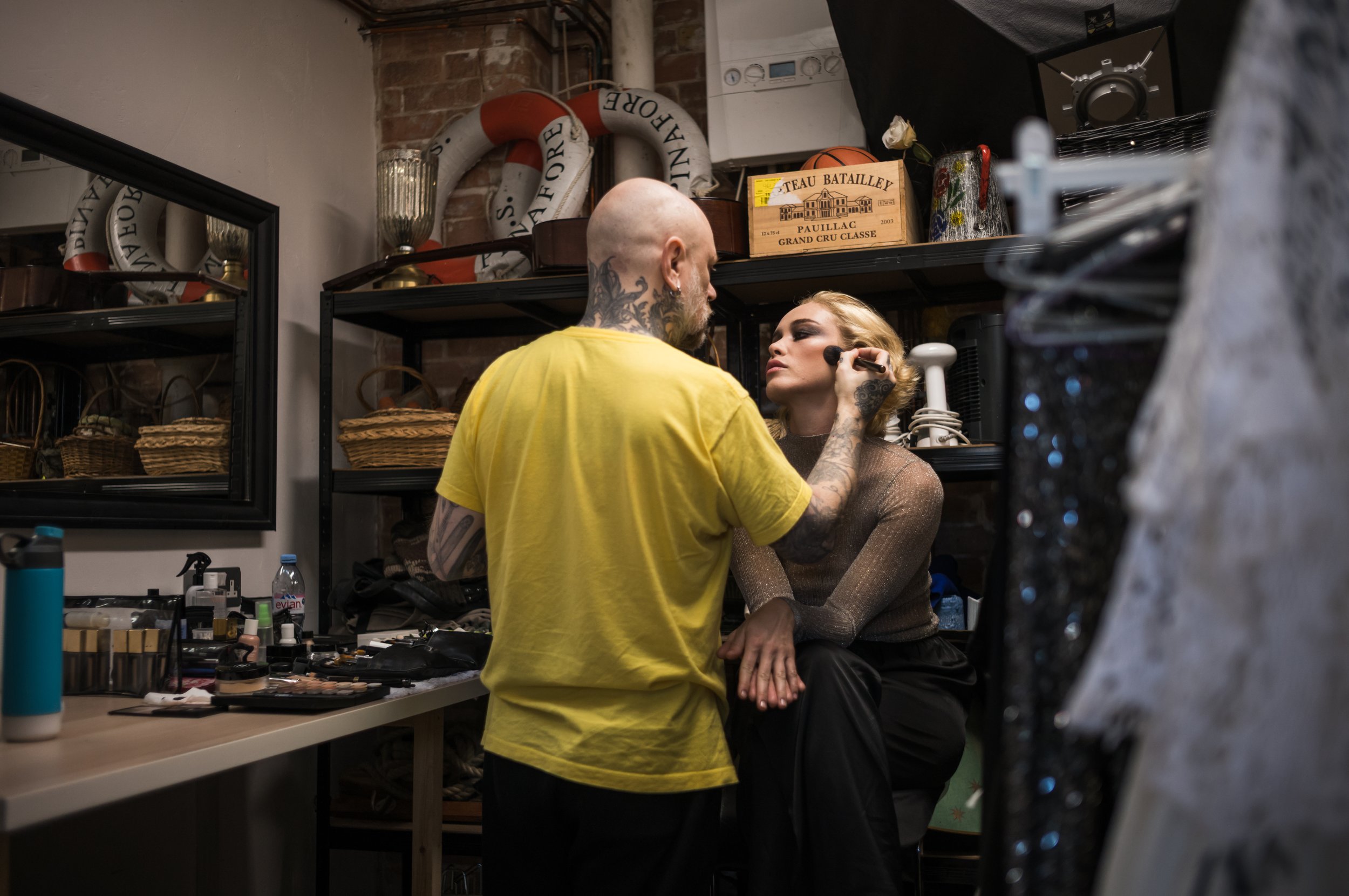
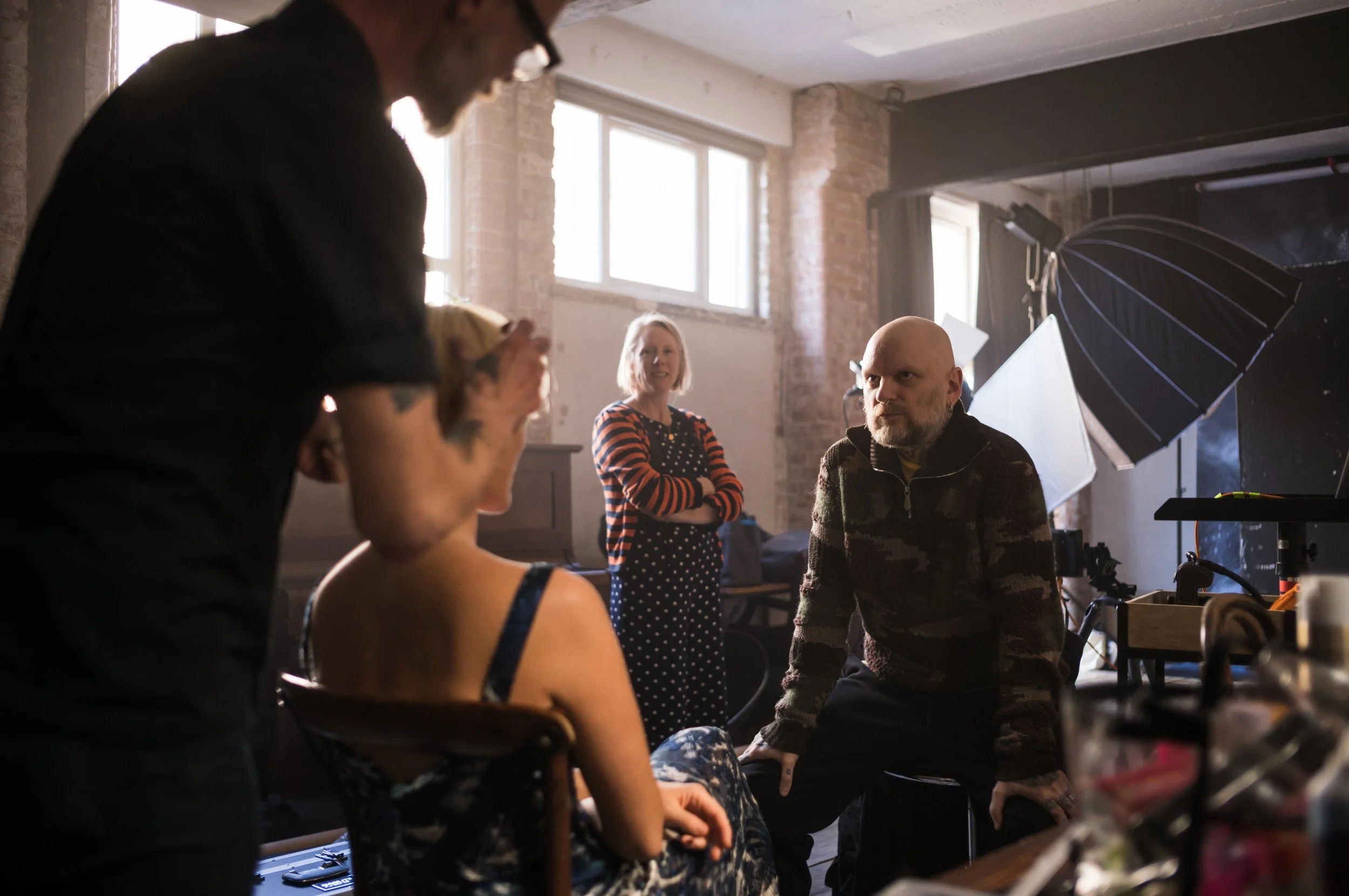
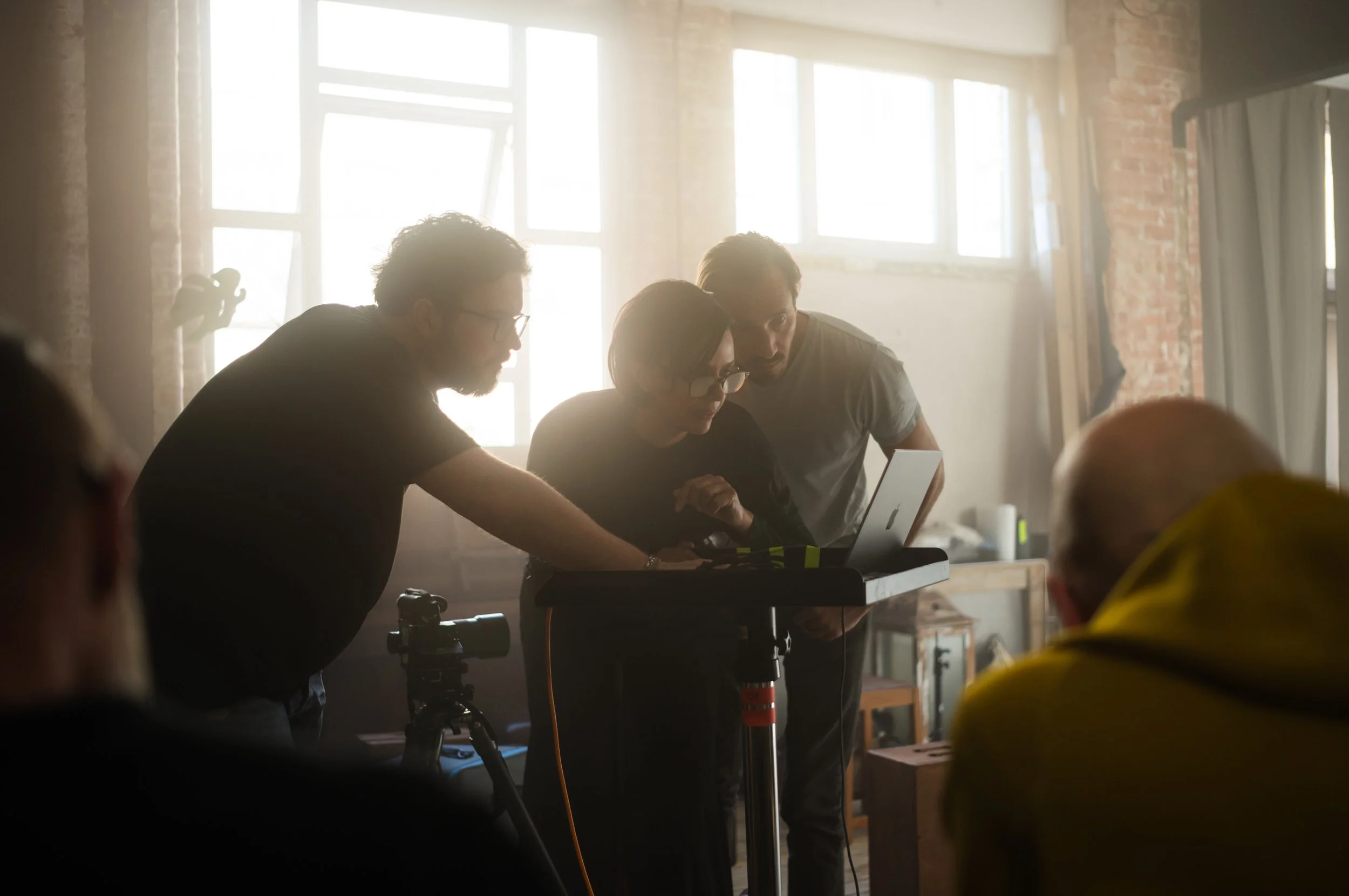
Nothing in S·he was improvised. Every element was drawn, measured, built, or rehearsed before it was photographed. This was not about perfection. It was about constructing presence with the same seriousness we give to architecture, music, or literature.
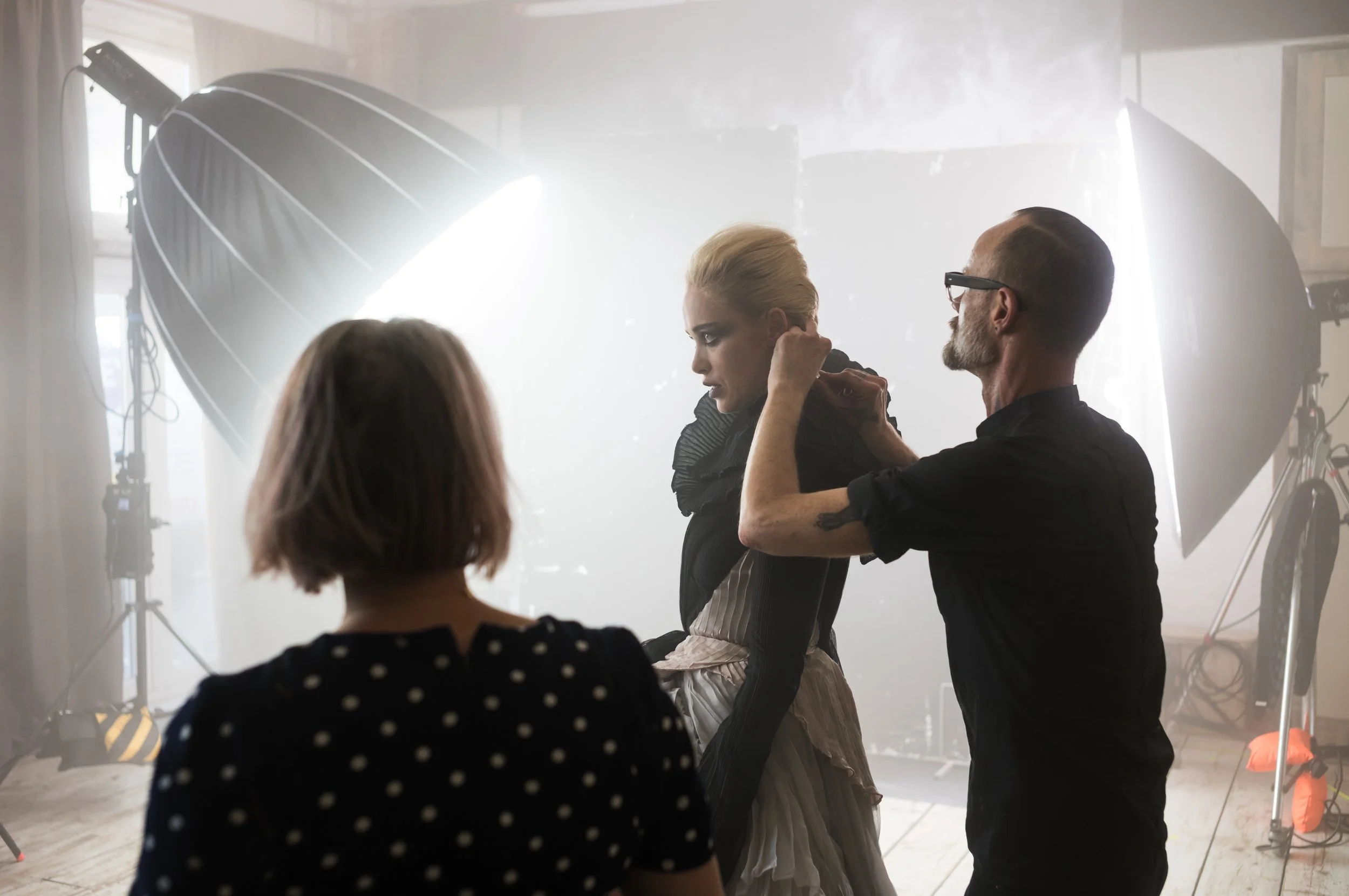
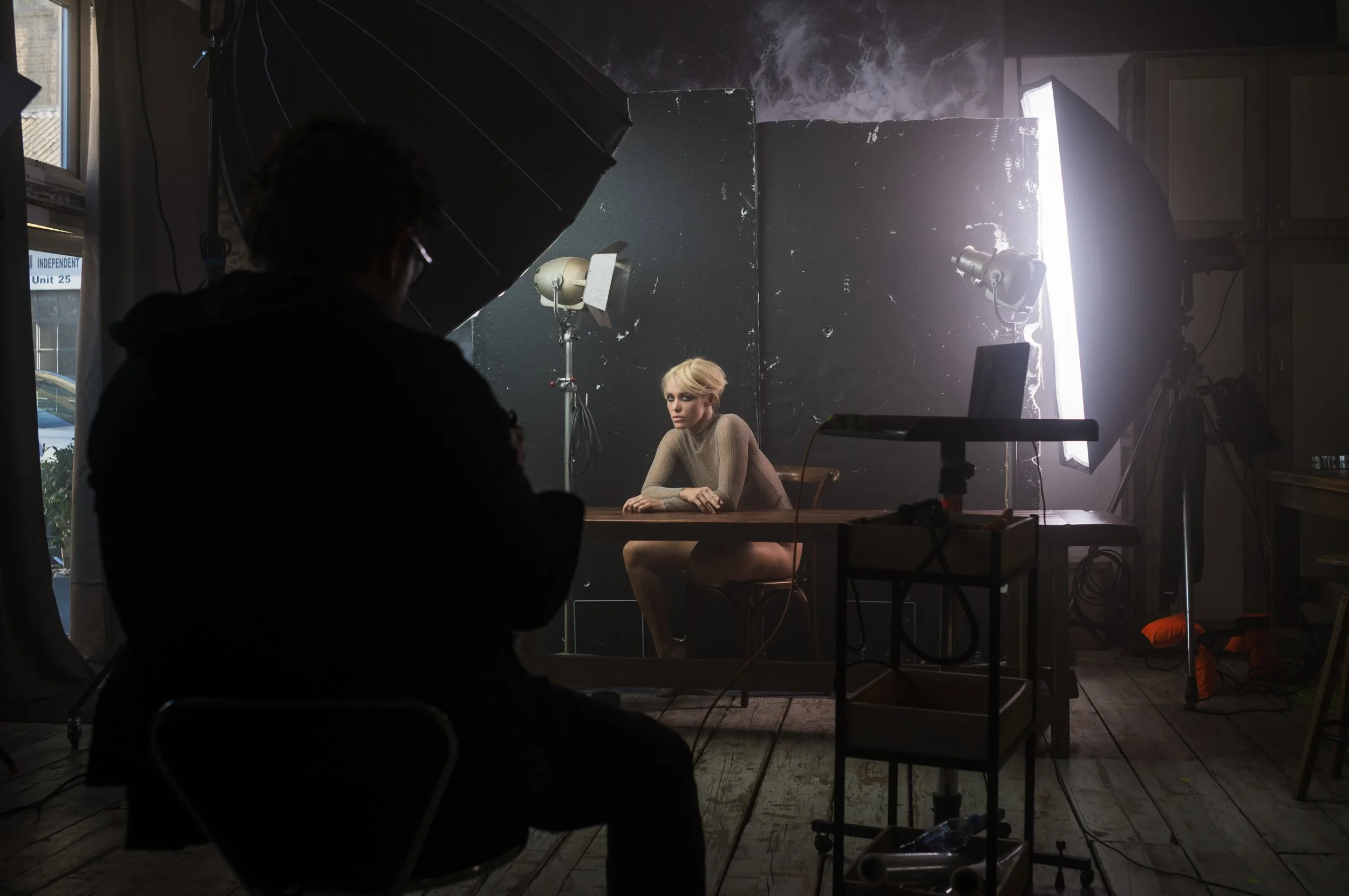
The garments were designed in conversation with the characters. They were cut to match gesture and narrative, not fashion or historical reference. Backdrop was hand-painted and scaled to suit posture and emotional tone. Lighting was adjusted to behave like memory, sharpening certain edges while allowing others to fade.
Material choice was never decorative. Platinum, palladium, lapis, copper, Japanese and Italian papers were selected for both their symbolic weight and their physical behavior. Some of these materials live on the surface. Others exist only on the reverse of the print, reinforcing the idea that what is unseen can still define everything we perceive.
The portrait of The Catalyst required a separate approach. It was printed in sixteen individual fragments, each developed by hand using platinum and palladium, and each exposed under specific conditions. Temperature, humidity, and chemistry were controlled so that every segment would develop its own tonal identity while still contributing to a unified surface.
Making S·he involved building every component of the image by hand. Set, story, material, light. Nothing was borrowed. Nothing outsourced its meaning. The work was built to carry the weight of authorship. It is constructed to last.